

Nitrogen is one of the most important nutrients for crop growth, but it is also one of the easiest to lose in modern farming. Many growers apply nitrogen fertilizer every season, yet a large part of that nitrogen may be lost through leaching, volatilization, runoff, or inefficient soil transformation. This is why biological nitrogen fixation is becoming an important topic in sustainable agriculture.
Instead of relying only on chemical nitrogen input, biological nitrogen fixation uses beneficial microorganisms to convert atmospheric nitrogen into plant-available forms. When combined with microbial urease inhibition, soil improvement, root nutrition, and carbon support, it can help growers improve nitrogen use efficiency while reducing unnecessary fertilizer waste.
For farms seeking better yield, healthier soil, and more efficient fertilization, microbial solutions such as Nitrogen-Max, Amino Acid Soluble Fertilizer, Carbon-Fixing Microbial Agent, and a complete Agricultural Microecology program can create a more balanced crop nutrition system.
Table of Contents
What Is Biological Nitrogen Fixation?

Biological nitrogen fixation is a natural microbial process in which specific bacteria convert atmospheric nitrogen gas, or N₂, into forms that plants can absorb and use. Since plants cannot directly use nitrogen gas from the air, microbes play a key role in making this nitrogen available.
In agricultural soils, nitrogen-fixing microorganisms can live in the rhizosphere, on root surfaces, or in association with crop roots. Through their metabolic activity, they help transform nitrogen into ammonium nitrogen or other plant-available nitrogen forms.
This process matters because nitrogen is directly linked to:
Crop vegetative growth
Leaf development and chlorophyll formation
Protein synthesis
Root activity
Yield formation
Stress tolerance
Crop quality
However, applying more nitrogen fertilizer is not always the best answer. When nitrogen is not efficiently used, it can lead to fertilizer waste, soil imbalance, nitrate leaching, ammonia volatilization, and higher production costs.
That is why modern crop nutrition is moving from “more fertilizer input” toward “higher nutrient use efficiency.”
Why Nitrogen Use Efficiency Matters
Nitrogen use efficiency refers to how effectively crops absorb and utilize the nitrogen available in soil or applied through fertilizer. In many farming systems, nitrogen fertilizer is applied at high rates, but crop uptake is limited by soil structure, microbial activity, root health, moisture conditions, pH, and fertilizer transformation speed.
Low nitrogen use efficiency can create several problems.
First, growers spend more on fertilizer but may not see proportional yield improvement. Second, nitrogen loss can increase environmental pressure. Third, excessive nitrogen can disturb crop nutrient balance, resulting in weak stems, delayed maturity, reduced stress resistance, or lower crop quality.
Improving nitrogen use efficiency means helping crops use nitrogen more effectively, rather than simply increasing nitrogen application.
Common Causes of Nitrogen Loss in Soil
Nitrogen loss usually happens through several pathways.
Ammonia Volatilization
When urea is applied to soil, soil urease enzymes rapidly break it down. If the process is too fast, part of the nitrogen may be lost as ammonia gas. This is especially common in high-temperature conditions, alkaline soils, surface application, or poorly managed irrigation systems.
Leaching
Nitrate nitrogen is highly mobile in soil. When irrigation or rainfall is heavy, nitrate may move below the root zone before crops can absorb it.
Runoff
In sloped fields or compacted soils, nitrogen can be carried away by surface runoff, especially when fertilizer is applied before heavy rainfall.
Microbial Imbalance
Healthy soil microbes help regulate nutrient transformation. But in degraded soils, microbial diversity and activity are often reduced, weakening the soil’s natural nutrient cycling capacity.
Weak Root Systems
Even when nitrogen is available, crops cannot absorb it efficiently if roots are underdeveloped, damaged, or stressed by salinity, drought, disease, compaction, or poor rhizosphere conditions.
This is why nitrogen efficiency should not be treated as a fertilizer issue alone. It is also a soil health, root health, microbial activity, and crop metabolism issue.
How Microbes Improve Nitrogen Use Efficiency
Beneficial microorganisms can improve nitrogen use efficiency in several ways.
1. Converting Atmospheric Nitrogen into Available Nitrogen
Nitrogen-fixing microbes can convert nitrogen gas from the air into plant-available nitrogen. This creates a biological nitrogen source that supports crop growth and helps reduce total dependence on chemical nitrogen fertilizer.
In products such as Nitrogen-Max, nitrogen-fixing microbial strains are used to increase soil-available nitrogen from the source. This helps crops access nitrogen more continuously during key growth stages.
2. Slowing Nitrogen Loss from Urea
Microbial urease inhibition is another important technology. Certain beneficial strains can produce urease-inhibiting substances that reduce soil urease activity. This slows the breakdown of urea and helps reduce nitrogen loss through ammonia volatilization.
For growers, this means nitrogen fertilizer can last longer in the soil and become more available to crops over time.
3. Supporting Root Activity
Nitrogen uptake depends heavily on root function. Beneficial microbes can improve the rhizosphere environment, stimulate root development, and support nutrient absorption.
When roots are stronger, crops can absorb nitrogen, phosphorus, potassium, iron, and other nutrients more efficiently.
4. Improving Soil Structure
Microbial metabolites such as organic acids and polysaccharides can improve soil aggregation, aeration, and water-holding capacity. A better soil structure allows roots to grow deeper and absorb nutrients more effectively.
5. Enhancing Crop Stress Resistance
Drought, salinity, cold, and soil-borne diseases can reduce nitrogen absorption. Beneficial microbes help improve crop stress tolerance, making nitrogen uptake more stable under challenging conditions.
Biological Nitrogen Fixation vs. Traditional Nitrogen Fertilization
| Item | Traditional Nitrogen Fertilizer | Biological Nitrogen Fixation Solution |
|---|---|---|
| Nitrogen source | Chemical nitrogen input | Microbial conversion of atmospheric nitrogen |
| Main goal | Rapid nitrogen supply | Continuous nitrogen support and efficiency improvement |
| Risk of loss | Higher risk of volatilization and leaching | Helps reduce nitrogen loss when combined with urease inhibition |
| Soil impact | May not improve soil ecology | Supports microbial activity and rhizosphere health |
| Crop benefit | Fast nutrient response | Better nutrient use, root support, and long-term soil improvement |
| Sustainability | Depends on application rate and management | More aligned with sustainable fertilization |
This does not mean biological nitrogen fixation completely replaces fertilizer in every farming system. A more practical approach is to combine microbial technology with rational fertilizer management. The goal is to make every unit of fertilizer work harder.
Nitrogen-Max: A Microbial Agent for Nitrogen Efficiency
Nitrogen-Max is designed around the dual-core technologies of biological nitrogen fixation and microbial urease inhibition. Its purpose is to increase soil-available nitrogen while slowing chemical nitrogen loss.
This makes it suitable for farms that want to improve nitrogen use efficiency without relying only on higher fertilizer application.
Nitrogen-Max can be positioned as a microbial nitrogen efficiency solution for:
Field crops such as corn, wheat, rice, and soybean
Vegetables with high nutrient demand
Cash crops requiring stable growth and quality
Soils with low fertility or reduced microbial activity
Farms seeking fertilizer reduction and yield improvement
The product’s value is not limited to nitrogen supplementation. It also supports soil improvement, crop growth, stress resistance, and quality enhancement.
Nitrogen-Max Microbial Agent | Nitrogen Fixation Support
Why Root Nutrition Still Matters
Biological nitrogen fixation works better when crop roots are active and the rhizosphere environment is healthy. This is where Amino Acid Soluble Fertilizer can support the broader nutrition system.
Amino acid-based soluble fertilizer can provide small-molecule amino acids that are easier for crops to absorb. When combined with beneficial microbes, chelated iron, functional enzymes, and micronutrients, it can help:
Quickly supplement nutrients
Support root and seedling development
Improve rhizosphere beneficial flora
Reduce micronutrient immobilization
Support crops under continuous cropping pressure
Improve crop recovery during stress periods
This makes Amino Acid Soluble Fertilizer a good complementary product to nitrogen-focused microbial solutions. While Nitrogen-Max improves nitrogen availability and nitrogen retention, Amino Acid Soluble Fertilizer can support root vitality and nutrient absorption.
Amino Acid Soluble Fertilizer for root growth and fast nutrient support
Carbon Supply and Photosynthesis: The Overlooked Factor
Nitrogen efficiency is closely related to photosynthesis. Crops need carbon skeletons to convert absorbed nitrogen into amino acids, proteins, and biomass. If photosynthesis is weak, nitrogen use may also become less efficient.
This is why Carbon-Fixing Microbial Agent is an important part of the agricultural microbial solution.
A carbon-fixing microbial agent uses active carbon-fixing microorganisms to capture and convert CO₂ at the crop leaf surface, helping provide organic nutrients that support photosynthesis and crop growth.
It can support:
Carbon supplementation
Photosynthetic efficiency
Sugar and dry matter accumulation
Stress recovery
Crop growth and yield formation
Quality improvement
When crops have stronger photosynthesis, they can use nutrients more effectively. In this sense, carbon support and nitrogen efficiency are connected.
Carbon-Fixing Microbial Agent for crop carbon support and photosynthesis improvement
Agricultural Microecology: A System Solution, Not a Single Product
One of the most important points for growers is that crop performance is rarely determined by one factor alone. Nitrogen availability, root health, soil microbial balance, carbon supply, soil structure, and stress resistance all interact with each other.
That is why your website should present Agricultural Microecology as a complete solution category, not just a product list.
A strong Agricultural Microecology program can include:
Nitrogen efficiency improvement
Biological nitrogen fixation
Microbial urease inhibition
Root nutrition support
Soil microbial regulation
Carbon-fixing microbial technology
Soil-borne disease management
Saline-alkali soil improvement
Root-knot nematode control
Fruit quality enhancement
How Farmers Can Use Microbial Nitrogen Solutions More Effectively
To get better results from biological nitrogen fixation and microbial nitrogen efficiency products, growers should focus on correct application timing and soil conditions.
Apply Before or During Key Growth Stages
Microbial products should be applied before severe nutrient deficiency appears. For nitrogen efficiency, application during early root development, vegetative growth, and key nutrient demand stages can help maximize performance.
Maintain Suitable Soil Moisture
Beneficial microorganisms need suitable moisture to colonize and function. Extremely dry soil can reduce microbial activity.
Avoid Mixing with Strong Fungicides
Many microbial agents contain live bacteria. Avoid mixing them directly with strong fungicides, strong alkaline products, or highly oxidative chemicals unless compatibility has been tested.
Combine with Organic Matter When Possible
Organic matter supports microbial survival and soil structure. Combining microbial agents with organic fertilizer or humic substances can often improve long-term results.
Match the Product with the Problem
If the main problem is nitrogen loss, use Nitrogen-Max.
If the crop needs fast nutrient recovery and root support, use Amino Acid Soluble Fertilizer.
If photosynthesis and carbon supply are weak, use Carbon-Fixing Microbial Agent.
If the farm needs a full soil and crop improvement plan, use an Agricultural Microecology solution.
Practical Application Scenarios
| Farming Problem | Microbial Solution Direction | Related Product |
|---|---|---|
| High nitrogen fertilizer cost | Improve nitrogen use efficiency | Nitrogen-Max |
| Urea nitrogen loss | Microbial urease inhibition | Nitrogen-Max |
| Weak roots and slow seedling recovery | Amino acid nutrition and rhizosphere support | Amino Acid Soluble Fertilizer |
| Poor photosynthesis after stress | Carbon supplementation and CO₂ conversion | Carbon-Fixing Microbial Agent |
| Soil degradation and low microbial activity | Agricultural microecology restoration | Agricultural Microecology |
| Continuous cropping pressure | Beneficial microbes and root environment improvement | Agricultural Microecology products |
| Low crop quality despite fertilizer input | Balanced nutrition, carbon supply, and microbial regulation | Integrated microbial solution |
Why Biological Nitrogen Fixation Supports Sustainable Agriculture
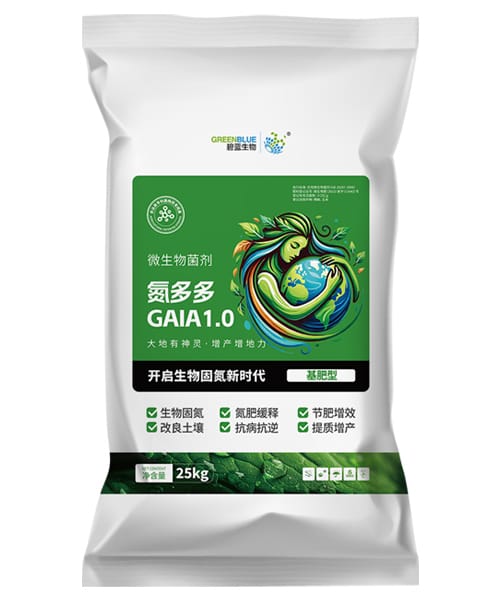
Sustainable agriculture is not simply about reducing inputs. It is about improving the efficiency of every input while protecting soil productivity.
Biological nitrogen fixation supports this goal because it helps:
Increase available nitrogen through microbial action
Reduce dependence on excessive chemical nitrogen
Improve fertilizer utilization
Support soil microbial balance
Enhance root and crop vitality
Reduce nutrient waste
Improve long-term soil productivity
For large-scale farms, distributors, and agricultural input companies, microbial nitrogen solutions offer a practical pathway toward greener, more efficient crop production.
How to Build a Nitrogen-Efficient Crop Nutrition Program
A stronger crop nutrition program should not rely on nitrogen alone. A more complete structure can be built in four layers.
Layer 1: Nitrogen Efficiency
Use Nitrogen-Max to support biological nitrogen fixation and microbial urease inhibition.
Layer 2: Root and Nutrient Absorption
Use Amino Acid Soluble Fertilizer to provide fast nutrient support, chelated iron, and root promotion.
Layer 3: Photosynthesis and Carbon Supply
Use Carbon-Fixing Microbial Agent to improve photosynthetic performance and carbon nutrition.
Layer 4: Soil Microecology
Use the broader Agricultural Microecology product system to improve soil health, rhizosphere balance, crop resistance, and sustainable yield potential.
Conclusion
Biological nitrogen fixation is becoming an important tool for improving nitrogen use efficiency in modern agriculture. By using beneficial microorganisms to increase soil-available nitrogen and reduce nitrogen loss, growers can move toward more efficient, sustainable, and cost-effective fertilization.
However, nitrogen efficiency works best when it is supported by root health, soil microbial balance, photosynthetic capacity, and stress resistance. That is why products such as Nitrogen-Max, Amino Acid Soluble Fertilizer, Carbon-Fixing Microbial Agent, and a complete Agricultural Microecology solution should be presented as part of one integrated crop nutrition strategy.
For farms looking to reduce fertilizer waste, improve soil health, and achieve stable crop performance, microbial technology offers a practical and scalable path forward.
FAQ
What is biological nitrogen fixation?
Biological nitrogen fixation is a microbial process that converts atmospheric nitrogen into plant-available nitrogen forms. It helps improve nitrogen supply and supports crop growth.
Can biological nitrogen fixation replace chemical fertilizer?
In most farming systems, it is better used as a nitrogen efficiency solution rather than a complete replacement. It can help reduce fertilizer waste and improve the effectiveness of applied nitrogen.
How does Nitrogen-Max improve nitrogen use efficiency?
Nitrogen-Max combines nitrogen-fixing microbes with microbial urease inhibition technology. It helps increase soil-available nitrogen and slow nitrogen loss from chemical fertilizer.
Why is Amino Acid Soluble Fertilizer useful in a nitrogen program?
Amino Acid Soluble Fertilizer supports fast nutrient absorption, root development, chelated iron supply, and beneficial rhizosphere activity. Stronger roots help crops absorb nitrogen more efficiently.
How does Carbon-Fixing Microbial Agent support crop nutrition?
Carbon-Fixing Microbial Agent helps capture and convert CO₂ on crop leaf surfaces, supporting photosynthesis, carbon nutrition, growth, yield, and stress recovery.
What is Agricultural Microecology?
Agricultural Microecology refers to the use of beneficial microorganisms to improve soil health, nutrient cycling, root environment, crop resistance, and sustainable crop production.