

Introduction
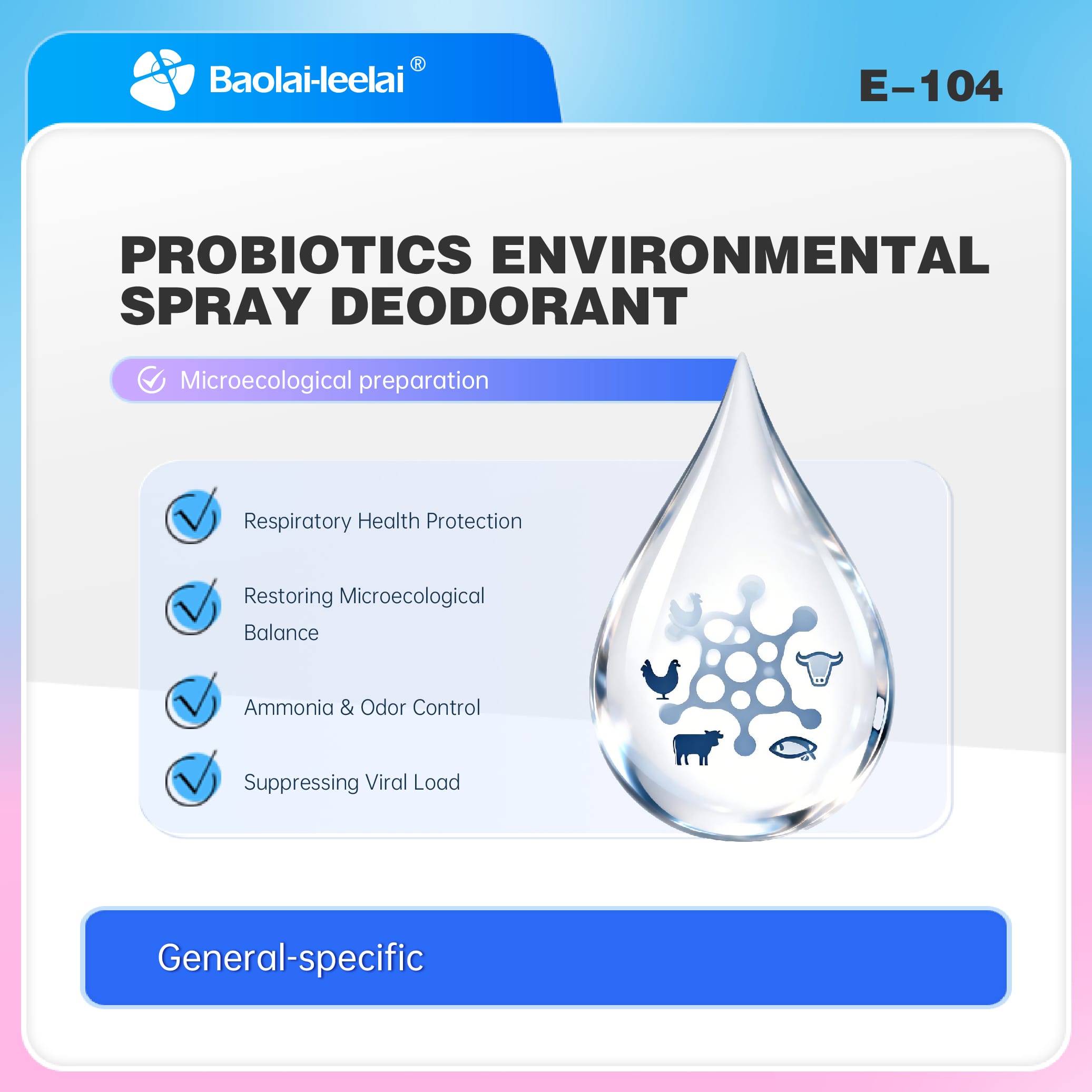
Probiotics for livestock odor control are used in feed, manure systems, litter, or environmental applications to influence microbial activity and organic-matter breakdown. They may support a broader odor-management program, but they do not replace ventilation, drainage, manure removal, or correction of nutrient and water waste.
Livestock odor is a mixture of compounds generated under different biological conditions. Ammonia, sulfur-containing compounds, volatile fatty acids, and other substances cannot all be managed by one mechanism. This guide explains where probiotics for livestock odor control may fit and how farms can avoid treating odor as a simple masking problem.
Odor-control products work inside a larger environmental system. The image represents a microbial approach, but ventilation, moisture, manure removal, drainage, stocking density, and feed management determine the conditions in which probiotics for livestock odor control are evaluated.
Where Livestock Odor Comes From
Manure, urine, wasted feed, wet litter, stagnant drains, mortality, and poorly stored organic material all contribute to odor. Ammonia is associated with nitrogen breakdown and is strongly affected by moisture, pH, temperature, ventilation, and the time manure remains in the building.
Anaerobic pockets can generate particularly strong odors. They develop where organic matter accumulates without enough oxygen, including deep wet bedding, blocked drains, pits, and compacted manure. Before applying probiotics for livestock odor control, farms should identify these physical locations.
Human smell is useful for detecting change, but it is subjective. Consistent inspection routes, ammonia measurements where appropriate, litter moisture, air speed, temperature, and humidity provide better evidence.
How Probiotics Fit an Odor-Control Program
Feed probiotics may influence digestion and manure characteristics indirectly. Manure fermentation products introduce microorganisms during treatment or storage. Environmental spray products are applied to surfaces or organic material. These routes have different objectives and should not be confused.
A product such as an environmental spray deodorization probiotic should be used on the surfaces and conditions specified by its instructions. It should not be added to feed unless it is specifically formulated and authorized for feed use.
| Application route | Primary target | Essential supporting control |
|---|---|---|
| Feed | Digestive and manure characteristics | Balanced formulation and water management |
| Litter or surface | Organic residues and local microbial activity | Dry bedding and adequate airflow |
| Manure storage | Decomposition during holding or fermentation | Correct moisture, mixing, drainage, and containment |
| Building-wide program | Overall odor exposure | Ventilation, cleaning, stocking, and maintenance |
Controls to Fix Before Adding a Microbial Product
Ventilation is the first line of control for gases and moisture in enclosed livestock buildings. Check fan operation, inlets, shutters, belts, sensors, static pressure, and emergency systems. A barn can smell worse even with clean surfaces if air distribution leaves stagnant zones.
- Repair drinker leaks and adjust water pressure.
- Remove wet feed and manure from corners and under equipment.
- Keep drains open and prevent standing wastewater.
- Match litter depth and replacement practices to the production system.
- Review stocking density and animal distribution.
- Prevent feed spillage and improve feeder adjustment.
Probiotics for livestock odor control cannot remove nitrogen that enters the manure through excessive dietary intake or feed waste. Work with a nutritionist to match nutrient supply to animal requirements and maintain diet consistency.

An integrated farm approach connects animal nutrition, housing, manure handling, and environmental management. Microbial products can support that system, but the physical causes of wetness and poor airflow still require direct correction.
Applying Probiotics Safely and Consistently
Map the intended treatment area and calculate application from actual surface area or manure volume according to the label. Clean equipment before mixing. If a product requires activation, follow the specified water quality, temperature, and time; unverified extended fermentation can change the microbial population.
Do not mix probiotics for livestock odor control with disinfectants unless compatibility is documented. Disinfectants are designed to reduce microorganisms and can inactivate a live microbial product. Separate sanitation and probiotic applications by the recommended interval.
Protect workers during mixing and spraying. Follow the safety data and label, use suitable protective equipment, avoid aerosol exposure, and maintain ventilation. A natural or biological description does not remove the need for safe handling.
How to Measure Whether the Program Works
Establish a baseline before changing the program. Record odor observations at the same locations and times, together with temperature, humidity, ventilation setting, litter moisture, manure depth, and animal numbers. Where instruments are used, calibrate them and follow a consistent sampling method.
- Use at least one objective indicator in addition to smell.
- Document repairs, clean-outs, diet changes, and weather conditions.
- Record probiotic lot, storage, mixture, dose, and treated area.
- Compare similar production stages and building conditions.
- Investigate sudden changes rather than masking them with fragrance.
A good trial distinguishes the effect of probiotics for livestock odor control from simultaneous improvements in ventilation or cleaning. If several corrections are made together, the total program may still be successful, but the farm should not attribute the result to one input without evidence.
Limits, Animal Health, and Environmental Responsibility
High ammonia exposure can affect workers and animals, and severe odor may signal unsafe conditions. Treat respiratory signs, eye irritation, abnormal behavior, or sudden gas readings as health and safety issues requiring immediate action, not as routine probiotic adjustments.
Manure storage and land application must follow local environmental and nutrient-management rules. The FAO livestock and environment resources describe the connection between production, nutrient flows, and environmental management.
Review the entire process from feed delivery to final manure use. Probiotics for livestock odor control are most credible when they support measurable hygiene and manure-management goals rather than hiding an unresolved source.
A documented schedule keeps probiotics for livestock odor control tied to actual farm conditions. Seasonal ventilation changes can alter how probiotics for livestock odor control are evaluated, and staff should record those changes whenever probiotics for livestock odor control are applied.
Conclusion
Probiotics for livestock odor control can support microbial management in feed, litter, surfaces, or manure when the route matches the problem. Start by finding the odor source, repairing ventilation and water faults, controlling organic accumulation, and establishing a baseline. Apply a documented product consistently and judge the whole program with objective measurements, animal observations, and worker safety in mind.
FAQ
Can probiotics eliminate all livestock odor?
No. Odor comes from multiple compounds and farm conditions. Probiotics may support management, but ventilation, dryness, cleaning, and manure handling remain essential.
Are feed and environmental probiotics interchangeable?
No. Use each product only by its labeled route. A surface spray is not automatically suitable for feed, water, or manure fermentation.
Can probiotics be mixed with disinfectants?
Usually not unless compatibility is documented. Disinfectants may inactivate live organisms, so applications often need to be separated.
How should odor-control results be measured?
Combine consistent odor observations with objective indicators such as ammonia, litter moisture, humidity, ventilation settings, and manure condition.
What should a farm fix first?
Correct low airflow, leaking drinkers, wet litter, blocked drains, manure buildup, feed waste, and excessive nutrient losses before relying on additives.