

Table of Contents
Introduction

Composted poultry manure is becoming an important organic fertilizer choice for farms, greenhouses, orchards, gardens, and soil improvement programs. It is rich in organic matter and plant nutrients, but its real value is not only about feeding crops. When properly composted, poultry manure can help improve soil structure, stimulate microbial activity, support nutrient cycling, and turn farm waste into a more stable resource.
The keyword composted poultry manure often attracts people who want a practical answer: Is it useful? Is it safe? How is it different from raw poultry manure? How should it be applied without harming crops or soil?
The simple answer is this: composted poultry manure can be highly valuable when the composting process is well managed. The composting stage helps reduce excessive odor, stabilize nutrients, improve handling, and lower the risk of applying fresh manure directly to soil. For crop production, that difference matters.
What Is Composted Poultry Manure?
Composted poultry manure is poultry waste that has gone through a controlled biological decomposition process. During this process, microorganisms break down organic materials such as manure, bedding, feathers, feed residues, and other farm organic matter. The result is a darker, more stable, easier-to-handle material that can be used as an organic soil amendment.
Unlike raw poultry manure, composted poultry manure has usually passed through a heating and stabilization stage. This process changes its texture, smell, nutrient behavior, and field performance. Instead of being a strong and unstable waste material, it becomes a more balanced fertilizer resource.
In practical farming terms, composted poultry manure is valued because it brings together three benefits:
It adds organic matter to soil.
It provides slow-release nutrients.
It supports soil biological activity.
That combination is why composted poultry manure is not only a fertilizer topic. It is also a soil health topic.
Why Poultry Manure Should Be Composted Before Soil Application
Fresh poultry manure is nutrient-rich, but it can also be difficult to manage. It may contain high levels of soluble nitrogen, strong odor, uneven moisture, active microbial decomposition, and materials that are not yet stable. Applying it directly to soil can increase the risk of crop stress, nutrient imbalance, odor problems, and inconsistent field results.
Composting helps solve these issues by giving microorganisms time and the right conditions to transform the manure. A controlled composting process can improve material stability and make manure easier to use as part of a soil fertility plan.
The main purpose of composting poultry manure is not simply to make it look dry or smell better. Good composting changes the biological and chemical behavior of the material. It helps convert unstable organic matter into a more mature amendment that releases nutrients more gradually.
For crops, this means composted poultry manure is generally easier to integrate into soil management than fresh manure. For farm operations, it also improves storage, transportation, spreading, and environmental management.
Key Nutrients Found in Composted Poultry Manure
Composted poultry manure contains several nutrients that support plant growth. The exact nutrient profile depends on poultry type, feed, bedding, moisture, composting time, turning frequency, and storage conditions. That is why laboratory testing is always useful before large-scale application.
In general, composted poultry manure can supply nitrogen, phosphorus, potassium, calcium, magnesium, sulfur, and trace minerals. It also contributes organic carbon, which plays a major role in soil structure and microbial activity.
| Component | Main Role in Soil and Crops | Practical Note |
|---|---|---|
| Organic matter | Improves soil structure, water retention, and aggregation | Most valuable when compost is mature and stable |
| Nitrogen | Supports leaf growth and crop vigor | Release is slower than many soluble fertilizers |
| Phosphorus | Supports root development, flowering, and energy transfer | Application should match soil test results |
| Potassium | Helps regulate water movement and crop stress response | Useful for many field and horticultural crops |
| Calcium and magnesium | Support soil balance and plant structure | Levels vary with feed and bedding materials |
| Beneficial microbial activity | Helps nutrient cycling and organic matter transformation | Strongly influenced by composting quality |
The most important point is that composted poultry manure should not be treated as a single-nutrient fertilizer. It is a multi-functional soil amendment. Its value comes from nutrients, carbon, biology, and structure working together.
How Composted Poultry Manure Supports Soil Biology
Healthy soil is alive. It contains bacteria, fungi, actinomycetes, protozoa, nematodes, and other organisms that help break down organic matter, release nutrients, and build soil structure. Composted poultry manure can support this living system by adding organic carbon and biologically transformed material.
When added to soil, mature composted poultry manure can help create a better environment for microbial activity. Microorganisms use organic matter as an energy source. As they work, they help transform nutrients into forms that plants can access over time.
This is where composted poultry manure becomes especially valuable in long-term soil management. Chemical nutrients may feed crops directly, but organic amendments also feed the soil system. Over time, better soil biology can support improved nutrient efficiency, stronger root zones, and more resilient crop growth.
Microbial fertilizer technology can also support this direction. For example, Baolai-Leelai’s Agricultural Microecology solutions focus on soil health, nutrient use, biological nitrogen fixation, and sustainable crop production, which connects naturally with the role of composted organic resources in modern farming.
Composted Poultry Manure vs Raw Poultry Manure
The difference between composted poultry manure and raw poultry manure is one of the most important topics for anyone planning soil application. Both come from poultry production, but their field behavior can be very different.
Raw poultry manure is fresh or minimally treated. It may contain high moisture, strong odor, unstable nitrogen forms, active decomposition, and uneven material structure. It can be useful in some systems, but it requires careful handling.
Composted poultry manure has gone through microbial transformation. It is usually more stable, more uniform, and easier to apply. The nutrients are often released more gradually, and the material is less likely to create sudden crop stress when used correctly.
| Factor | Raw Poultry Manure | Composted Poultry Manure |
|---|---|---|
| Stability | Often unstable and actively decomposing | More stable after controlled decomposition |
| Odor | Usually stronger | Usually reduced when composted well |
| Crop safety | Higher risk if applied improperly | More suitable for planned soil application |
| Handling | Can be wet, sticky, and uneven | Easier to store, spread, and blend |
| Nutrient release | Faster and less predictable | More gradual and manageable |
| Soil impact | Can be useful but needs caution | Better fit for soil health programs |
This comparison shows why composted poultry manure is often preferred for planned crop production. It gives farms more control and reduces many of the problems linked with fresh manure use.
Practical Application Methods for Different Crop Systems
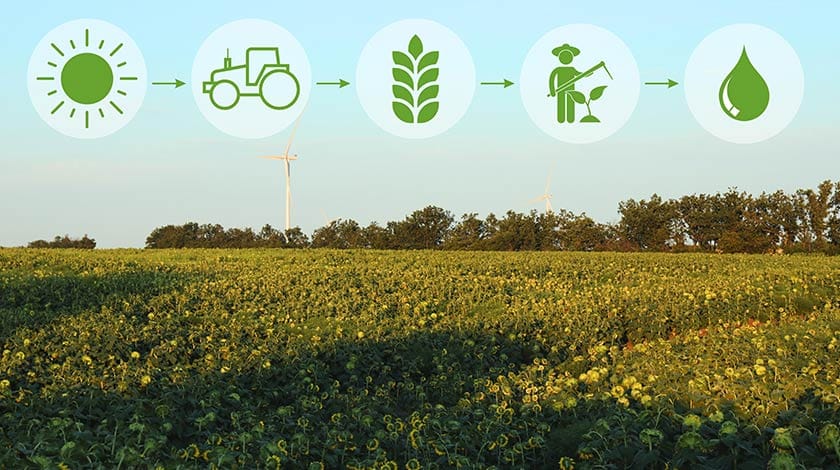
The best way to use composted poultry manure depends on crop type, soil condition, climate, application timing, and nutrient demand. There is no single application method that fits every field. A good plan starts with soil testing and compost analysis.
For field crops, composted poultry manure is often applied before planting and incorporated into the soil. This allows nutrients and organic matter to interact with the root zone before crop demand becomes high.
For vegetables, timing is especially important. Mature compost should be used carefully to avoid direct contact with sensitive seedlings. It can be applied before bed preparation, blended into soil, or used as part of a broader fertility program.
For orchards and perennial crops, composted poultry manure can be applied around the root zone while avoiding direct contact with the trunk or stem. This helps support long-term soil improvement and nutrient cycling.
For greenhouse production, extra care is needed. Greenhouse soils and growing media can accumulate salts more quickly, so compost maturity and application rate must be controlled.
In every system, composted poultry manure should be treated as part of a complete fertility strategy. It should not replace soil testing, crop observation, irrigation management, or nutrient planning.
Important Quality Indicators Before Field Use
High-quality composted poultry manure should be stable, mature, and suitable for the intended crop system. Visual appearance alone is not enough. A dark color does not always mean the compost is finished.
Several indicators can help evaluate compost quality:
The material should have an earthy smell rather than a sharp ammonia odor.
The texture should be relatively uniform and not overly wet.
The temperature should return closer to ambient conditions after active composting.
The compost should not contain large amounts of undecomposed bedding or foreign material.
The nutrient profile should be tested when used for larger crop areas.
Salt levels should be considered, especially for sensitive crops or greenhouse systems.
Maturity is especially important. Immature compost can continue decomposing after application, which may compete with plant roots for oxygen or create temporary nutrient imbalance. Stable composted poultry manure is much easier to manage and more predictable in the field.
How Microbial Management Improves Manure Composting Results
Composting poultry manure is a biological process, so microbial management is central to quality. Microorganisms drive the breakdown of organic matter, heat generation, odor transformation, and stabilization. However, they need the right environment to work well.
The main control points are moisture, oxygen, carbon balance, pile size, temperature, and turning schedule. When the pile is too wet, oxygen becomes limited and odor may increase. When it is too dry, microbial activity slows down. When the pile is too compacted, decomposition becomes uneven.
A controlled microbial process can make composted poultry manure more consistent. This is why a manure fermentation starter can be useful in manure treatment programs where the goal is to guide microbial activity, improve process stability, and make composting easier to manage.
Still, a microbial starter is not a shortcut for poor management. It works best when the basic composting conditions are already under control. Think of it as a biological support tool inside a managed process, not a replacement for moisture adjustment, turning, and observation.
Common Mistakes That Reduce Compost Quality
One common mistake is applying poultry manure before it is fully composted. The material may look dry on the surface, but the inside can still be unstable. This can lead to odor, uneven nutrient release, and crop stress.
Another mistake is ignoring moisture. Poultry manure mixed with bedding can become too dry, while manure from certain housing systems may be too wet. Both conditions slow down proper composting.
Poor aeration is also a major problem. Composting needs oxygen. If the pile is too compacted or not turned when needed, anaerobic zones can form. These areas often create unpleasant odor and uneven decomposition.
A fourth mistake is using composted poultry manure without testing soil conditions. If soil already contains high levels of phosphorus or salts, repeated application can create long-term imbalance.
Finally, some farms judge compost quality only by smell. Odor is useful, but it is not enough. Good compost assessment should combine smell, texture, temperature, maturity, and nutrient testing.
Conclusion
Composted poultry manure is a practical and valuable organic fertilizer when it is produced and applied correctly. It supplies nutrients, adds organic matter, supports microbial activity, and helps turn poultry farm waste into a useful soil resource.
Its real strength is balance. It is not as fast-acting as many soluble fertilizers, and it should not be applied without planning. But when composted well, tested properly, and used according to crop and soil needs, composted poultry manure can support healthier soil and more sustainable crop production.
For long-term farming, the goal is not just to add nutrients. The goal is to build a stronger soil system. Composted poultry manure can play an important role in that system because it connects fertility, biology, organic matter, and resource recycling in one material.
FAQ
What is composted poultry manure?
Composted poultry manure is poultry waste that has been biologically decomposed under controlled conditions. The process helps stabilize organic matter, reduce strong odor, improve handling, and create a more usable soil amendment for crop production and soil health improvement.
Is composted poultry manure better than raw poultry manure?
Composted poultry manure is usually easier and safer to manage than raw poultry manure because it is more stable and less likely to cause odor or crop stress when applied correctly. Raw manure can still be nutrient-rich, but it requires more careful handling and timing.
Can composted poultry manure improve soil health?
Yes. Composted poultry manure adds organic matter, supports microbial activity, improves soil structure, and helps nutrient cycling. Its value is not limited to nitrogen or phosphorus. It also contributes carbon and biological activity that support long-term soil function.
How should composted poultry manure be applied?
Application should be based on soil tests, compost analysis, crop needs, and field conditions. It is often applied before planting and mixed into soil. For sensitive crops, avoid excessive rates and make sure the compost is mature and stable before use.
Does composted poultry manure still smell?
Well-composted poultry manure usually has a milder, earthier smell than raw manure. If it still has a strong ammonia or rotten odor, the composting process may be incomplete or poorly aerated. Moisture, oxygen, and turning control are important for odor management.