

Table of Contents
Introduction
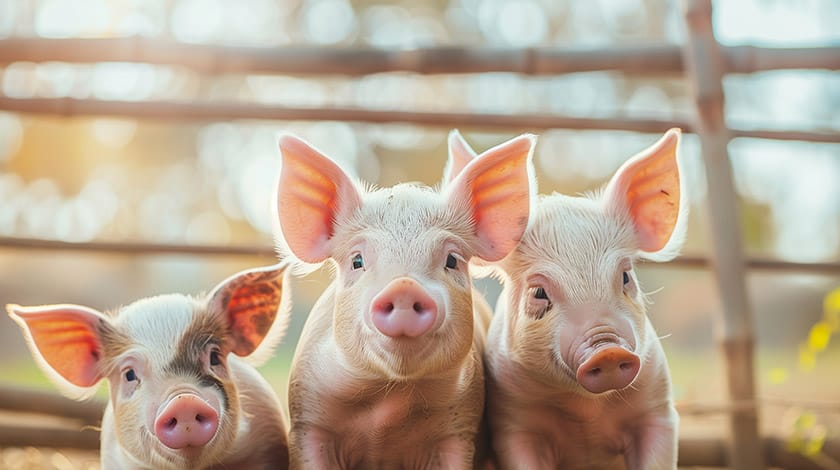
Swine probiotics are increasingly used to support stable digestion, feed efficiency, and herd resilience in modern pig production. Their value is especially relevant during weaning, diet transitions, transportation, heat stress, and other periods when the intestinal microbial balance can change quickly.
A successful probiotic program is not simply a matter of adding more bacteria to feed. Producers need to match the microbial strains, delivery method, production stage, and management objective. This guide explains how swine probiotics work, where they fit in practical farm programs, and what buyers should examine before selecting a product.
What Are Swine Probiotics?
Swine probiotics are live beneficial microorganisms formulated for pigs and supplied through feed, drinking water, or another approved delivery system. Their primary purpose is to support a more favorable microbial environment in the digestive tract. Depending on the formulation, they may also contribute enzymes, organic acids, or metabolites that assist digestion and intestinal stability.
Common microorganisms used in pig nutrition include selected strains of Bacillus, lactic acid bacteria, and yeast. These groups are not interchangeable. Spore-forming Bacillus strains are often valued for storage and processing stability, while lactic acid bacteria may be selected for acid production and microbial competition. Yeast products can support digestive conditions and feed utilization in particular applications.
The product label should identify the intended animal, application route, viable count, storage conditions, and recommended use. A vague claim such as “improves growth” is not enough to determine whether a product is suitable for piglets, breeding animals, or grower-finisher pigs.
Why Gut Health Matters in Pig Production
The pig intestine is responsible for nutrient digestion and absorption, but it is also an important physical and immunological barrier. Feed changes, environmental stress, pathogens, poor water quality, and inconsistent intake can disturb this system. Young pigs are particularly sensitive because their digestive and immune functions are still developing.
When gut function is unstable, farms may observe loose feces, reduced feed intake, uneven daily gain, higher treatment frequency, and greater variation within a group. These signs can have many causes, so swine probiotics should be used within a broader diagnostic and management process rather than as a substitute for veterinary assessment.
The Food and Agriculture Organization presents animal production as an integrated system involving nutrition, health, genetics, environment, and management. This is a useful framework for probiotics: microbial support is most effective when feed quality, hygiene, ventilation, water, and biosecurity are already controlled.
How Swine Probiotics Work
Different swine probiotics act through different biological pathways. A well-designed formulation may combine several complementary functions, but adding more strains does not automatically produce a better product. Strain selection, compatibility, viability, and the farm application all matter.
1. Microbial Competition
Beneficial microorganisms can compete with undesirable organisms for nutrients and ecological space. Some strains also produce organic acids or other compounds that help create less favorable conditions for certain harmful bacteria. This process is often described as competitive exclusion.
2. Digestive Enzyme Support
Selected microbial strains can produce enzymes such as protease, amylase, or other digestive-supporting compounds. These activities may help make nutrients more accessible, although the effect depends on the diet, strain, viable dose, and conditions in the digestive tract.
3. Gut Barrier Support
A stable intestinal barrier helps regulate what passes from the gut into the animal. Research on probiotics often examines epithelial integrity, mucus production, inflammatory signaling, and local immune responses. Product claims should remain consistent with the available strain-specific evidence.
4. Fermentation and Metabolites
Microbial fermentation can generate organic acids and other metabolites that influence the intestinal environment. The location and extent of fermentation are important: a useful response in one production stage may not be identical in another.
Benefits at Different Production Stages
| Production Stage | Main Management Pressure | Potential Probiotic Role |
|---|---|---|
| Suckling piglets | Developing gut and variable early intake | Support microbial establishment and digestive stability |
| Weaned piglets | Diet change, separation stress, reduced intake | Support adaptation, fecal consistency, and gut balance |
| Grower pigs | Feed efficiency and uniform growth | Support nutrient use and stable digestion |
| Finisher pigs | Consistent gain and manure management | Support feed utilization and fecal quality |
| Sows | High nutritional demand and farrowing stress | Support digestive consistency as part of sow nutrition |
This table describes management directions, not guaranteed outcomes. Swine probiotics must be evaluated in the context of farm health status, diet formulation, production stage, and measurable baseline performance.
Swine Probiotics for Weaning Management
Weaning combines several stressors: the piglet is separated from the sow, moved into a new social group, exposed to a different environment, and shifted from milk to solid feed. Feed intake often falls temporarily while the intestinal microbiota and digestive system adapt.
Swine probiotics used around weaning are generally intended to support this transition. The most useful program starts before or at the expected stress period, follows a consistent delivery plan, and is paired with highly digestible feed, reliable water access, good room temperature, and careful hygiene.
- Confirm that the product is intended for piglets.
- Check whether it is designed for feed or drinking water.
- Protect live microorganisms from excessive heat and incompatible chemicals.
- Apply the correct dose uniformly across the group.
- Record feed intake, fecal score, treatment rate, mortality, and weight uniformity.
A probiotic should not be used to delay investigation of persistent diarrhea, dehydration, fever, or poor growth. Those signs require timely professional evaluation and may involve infectious, nutritional, environmental, or management factors.
Swine Probiotics for Grower-Finisher Pigs

In later production stages, the commercial objective usually shifts toward consistent daily gain, feed conversion, group uniformity, and manure quality. The expected response from swine probiotics may be less dramatic than during acute transition periods, but small improvements in consistency can still matter across a large number of animals.
Evaluate the program over a meaningful production period. Compare groups with similar genetics, starting weight, diet, stocking density, health history, and environmental conditions. Changes in ingredients, weather, ventilation, or disease pressure should be recorded because they can influence the result.
Farms interested in species-specific microbial programs can review Baolai-Leelai’s animal microecology products and broader farming solutions. Product selection should be based on the production goal and application conditions rather than one headline benefit.
How to Choose Swine Probiotics
Match the Product to the Production Stage
A piglet transition product and a grower-finisher performance product may require different strain combinations and delivery strategies. The intended animal and stage should be stated clearly.
Check Strain Identification
Microbial effects are strain dependent. Buyers should look beyond the genus name and ask how the selected microorganisms relate to the intended function. A formulation should also explain the viable count at the relevant point in shelf life.
Review Stability and Delivery
Pelleting temperature, feed storage, water sanitation, organic acids, antibiotics, and disinfectants can affect microbial viability. The product must be suitable for the farm’s real mixing and delivery system.
Ask for Practical Technical Support
Useful support includes dose guidance, compatibility information, storage instructions, a defined monitoring plan, and realistic troubleshooting. To discuss a pig production scenario, farms and distributors can contact the Baolai-Leelai technical team with details about animal age, diet, water system, health pressure, and production goals.
Practical Application and Storage
Live microbial products require careful handling. Store sealed packages according to the label, protect them from moisture and direct sunlight, and use opened material within the recommended period. Do not assume that every probiotic tolerates high-temperature processing or prolonged storage in a premix.
- Verify the product and batch before use.
- Calculate the dose for the actual feed or water volume.
- Use appropriate premixing to improve distribution.
- Avoid unverified simultaneous use with disinfectants or medications.
- Document the application date, group, dose, and operator.
- Check storage temperature and package integrity regularly.
If drinking-water delivery is used, examine water pH, sanitizer residual, line cleanliness, and the time between preparation and consumption. Poor water-system control can reduce both product viability and dosing accuracy.
How to Evaluate Farm Results
Evaluation should begin before the product is introduced. Choose a small number of reliable indicators and establish a baseline. Depending on the farm objective, these may include average daily gain, feed conversion ratio, fecal score, medication frequency, mortality, feed intake, removal rate, or weight variation.
| Indicator | Why It Is Useful | Important Context |
|---|---|---|
| Fecal score | Tracks digestive consistency | Consider diet, pathogens, and water quality |
| Feed intake | Shows adaptation and appetite | Check temperature and feeder access |
| Average daily gain | Measures growth response | Compare similar starting weights |
| Feed conversion | Assesses feed-use efficiency | Confirm feed records and wastage |
| Treatment rate | Shows health-management demand | Use consistent treatment criteria |
| Weight uniformity | Reflects group consistency | Record sorting and removals |
A single production batch may be affected by unusual weather, feed variation, or disease events. Repeated, well-documented observations are more useful than selective success stories. If results are inconsistent, review product storage, dosing, mixing, water compatibility, and the original problem definition.
Conclusion
Swine probiotics can support gut stability, feed utilization, and production consistency when they are selected for the correct animal stage and used within a complete farm-management program. The strongest approach combines verified microbial products with sound nutrition, clean water, environmental control, biosecurity, and timely veterinary oversight.
Before adopting a program, define the target problem, choose measurable indicators, confirm strain and application information, and protect microbial viability during storage and delivery. This turns probiotic use from a general feed-additive decision into a practical, reviewable part of pig production management.
FAQ
What are swine probiotics?
Swine probiotics are beneficial live microorganisms formulated for pigs. They are used in feed or drinking water to support intestinal microbial balance, digestion, and production stability.
When are probiotics most useful for piglets?
They are commonly considered around weaning, feed transitions, transport, and other stress periods. Product selection and timing should fit the farm’s health and management plan.
Can swine probiotics replace antibiotics?
No. Probiotics can support preventive gut-health programs but do not replace diagnosis or necessary treatment. Antibiotic decisions should follow veterinary guidance and applicable regulations.
Can probiotics be added to pelleted feed?
Only when the formulation is suitable for the processing conditions or applied after heat treatment. Confirm temperature stability and guaranteed viable count with the supplier.
How should a farm measure probiotic performance?
Use baseline and follow-up records for indicators such as fecal score, intake, daily gain, feed conversion, treatment rate, mortality, and group uniformity.