

Table of Contents
Introduction
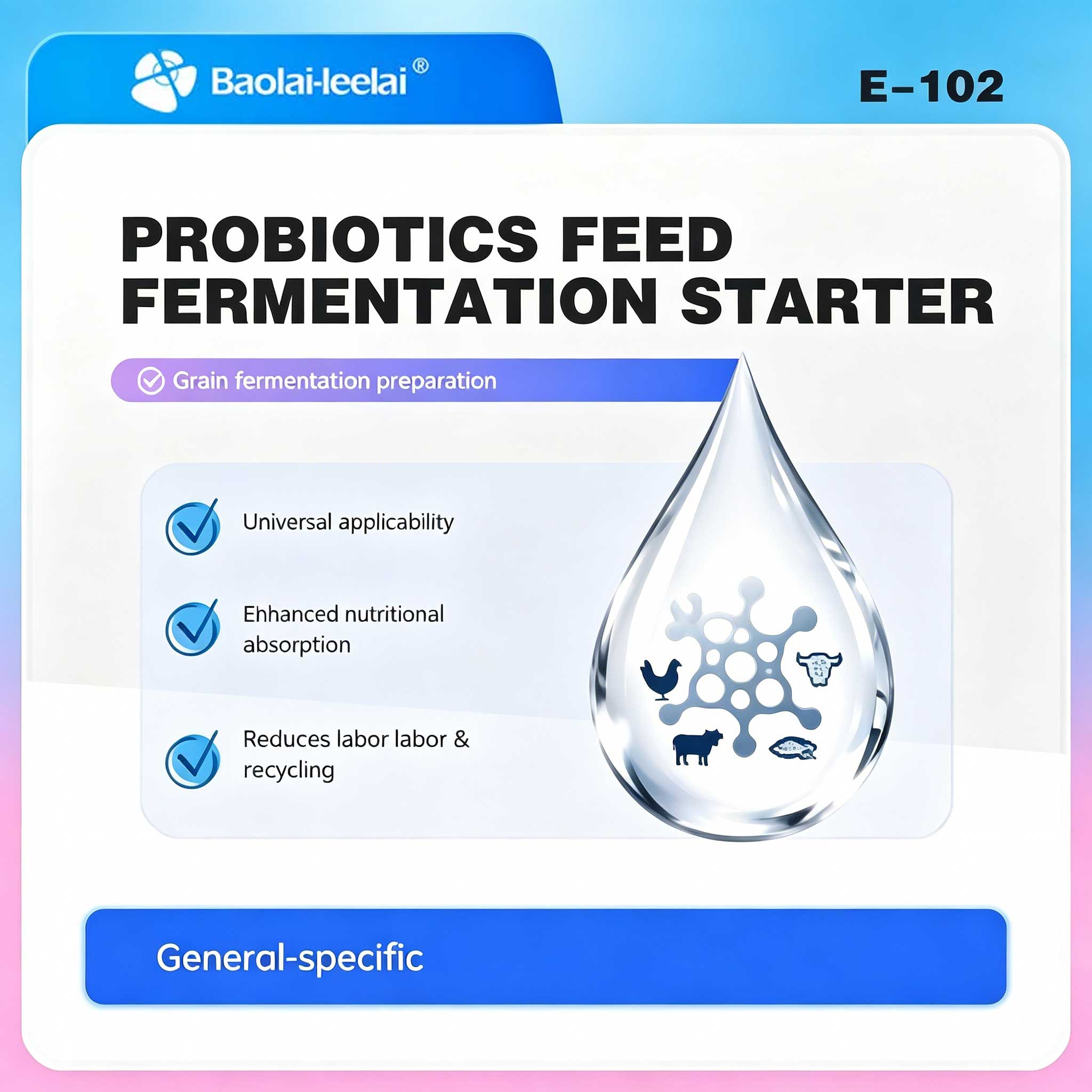
Fermentation is one of the oldest feed technologies, but its value depends on control. Wetting feed and hoping for the best is not a program. A good process uses selected microorganisms, correct moisture, stable temperature, clean equipment, and timely feeding. Under those conditions, fermented feed benefits can become visible in day-to-day livestock management.
The goal is not to make feed look different. The goal is to support feed hygiene, palatability, and digestive stability while making better use of available ingredients. Farms that understand fermented feed benefits usually treat fermentation as a repeatable production step, not a casual add-on.
This image shows a feed fermentation starter used in controlled programs. The practical value of fermented feed benefits depends on process discipline from mixing through storage and feeding.
What Controlled Fermentation Changes
During controlled fermentation, beneficial microorganisms consume available substrates and produce organic acids and other metabolites. The resulting environment can help lower pH, support feed preservation, and improve the sensory quality of some feed mixtures. The exact outcome depends on the ingredients, inoculant, moisture, temperature, and time.
Fermented feed benefits are strongest when the process is predictable. If the moisture is too low, fermentation may be weak. If the material is too wet or contaminated, unwanted organisms can grow. If feeding is delayed too long, quality can shift before animals receive the feed.
Ingredients and Conditions That Matter
Common fermentation inputs may include compound feed, by-products, forage materials, or other farm-specific ingredients. Suitability should be judged by cleanliness, particle size, nutrient profile, and storage condition. Dirty or moldy material should not be “fixed” by fermentation. Starting quality still matters.
| Control point | What to check | Why it affects results |
| Ingredient quality | Freshness, odor, visible mold, consistency | Poor inputs can carry risks into the process |
| Moisture | Uniform water addition and mixing | Microbes need water, but excess moisture can create problems |
| Starter culture | Correct product choice and handling | A reliable inoculant helps guide fermentation |
| Temperature | Stable range for the selected process | Temperature affects microbial activity and speed |
| Time | Consistent fermentation and feeding window | Overextended storage can reduce predictability |
When farms use a dedicated feed fermentation starter, the process becomes easier to standardize. Standardization is important because fermented feed benefits should be repeatable across batches, not dependent on luck.
Daily Production Control Points
A fermentation area should be treated like a feed production zone. Equipment should be clean, batches should be labeled, and workers should know the correct sequence for mixing, sealing, and feeding. Small mistakes compound quickly when the same error is repeated every day.
- Measure ingredients and water rather than estimating by eye.
- Mix thoroughly so the starter culture and moisture are evenly distributed.
- Use clean containers or sealed fermentation spaces.
- Label each batch with production time and intended feeding time.
- Discard material with abnormal odor, visible mold, or obvious spoilage.
These control points make fermented feed benefits easier to evaluate. Without them, changes in animal response may come from inconsistent production rather than the fermentation strategy itself.
Fermented feed is often considered alongside broader microbial management. Still, fermented feed benefits should be evaluated separately from barn spraying, manure treatment, or other environmental programs so managers can understand what each tool contributes.
Quality Signs to Review Before Feeding
A good fermented feed batch should have a clean, mildly sour aroma that matches the expected process. Texture should be uniform, and the feed should not show visible mold, clumping from poor mixing, or signs of excessive heating. Animals should also accept the feed without sudden refusal.
Simple quality checks are especially useful for farms that are new to fermentation. Reviewing pH, odor, temperature, and appearance gives the team a practical way to protect consistency. Fermented feed benefits can disappear quickly if poor batches reach the trough.
How to Introduce Fermented Feed

Introduce fermented feed gradually. Sudden ration changes can disturb intake even when the new feed is well made. Start with a defined group, keep the rest of the ration stable, and observe intake, manure condition, and animal behavior. If animals hesitate, review aroma, texture, inclusion level, and feeding timing.
Different species and ages respond differently. Young animals, high-producing animals, and animals under heat or transport stress may need more careful transitions. Fermented feed benefits are best protected when the program respects normal feeding behavior rather than forcing abrupt changes.
Conclusion
Fermented feed benefits livestock only when fermentation is controlled, repeatable, and connected to a clear feeding goal. The best programs begin with clean ingredients, use suitable starter cultures, manage moisture and time carefully, and introduce the feed gradually. Fermentation is not a magic repair for poor inputs; it is a disciplined process that can support better feed management when the basics are done well.
FAQ
What are fermented feed benefits for livestock?
Fermented feed benefits may include better feed palatability, more stable feed hygiene, and support for digestive consistency. Results depend on ingredient quality, starter culture, moisture, time, and farm execution.
Is fermented feed the same as wet feed?
No. Wet feed is simply feed mixed with water. Fermented feed benefits come from controlled microbial activity, proper inoculation, suitable conditions, and careful timing before the material is fed.
Can poor feed be improved by fermentation?
Fermentation should not be used to rescue moldy, spoiled, or unsafe ingredients. Fermented feed benefits are most reliable when the starting materials are clean, consistent, and appropriate for the target animals.
How should fermented feed be introduced?
Introduce it gradually in a defined group while keeping other ration factors stable. Watch intake, manure, behavior, and refusal. Fermented feed benefits are easier to judge when the transition is controlled.
What makes a batch unsafe to feed?
Abnormal odor, visible mold, excessive heating, poor texture, or clear spoilage signs should trigger rejection. Protecting fermented feed benefits requires strict quality checks before feed reaches animals.